Good food education helps children build skills, confidence and independence. New research shows it can also support attendance, engagement, wellbeing and belonging at school.
Food education matters.
Food education is vital to preparing children for life. It helps pupils develop practical skills, understand nutrition, build confidence, and develop a positive relationship with food that can last well beyond their time at school.
But the wider impact of food education is still too often overlooked. Food is usually discussed in relation to health, meals or cooking skills. This report asks a broader question: what happens when schools make food education a meaningful part of school life?
‘A Central Ingredient’ is the final report in Best Food Forward’s three-part research series on food education and its impact. Our first, the Food Education Mapping Project, explored what food education looks like in schools and showed that it works best when pupils can ‘Learn it, See it, Live it’. Hungry for Change then showed that parents and pupils see food education as essential, but that access remains inconsistent and unequal.
This new report looks at the wider role food education can play in supporting pupil outcomes. Drawing on qualitative research with senior leaders, department heads and food teachers in schools recognised for strong food education, ‘A Central Ingredient’ explores how food learning is understood by those delivering it well.
The findings suggest that food education is seen by these schools as practical, purposeful, inclusive and highly valued by many pupils. Schools that give children opportunities to learn about food, experience positive food cultures and apply their skills in real settings believe this supports attendance, engagement and behaviour, wellbeing, and to some degree attainment.
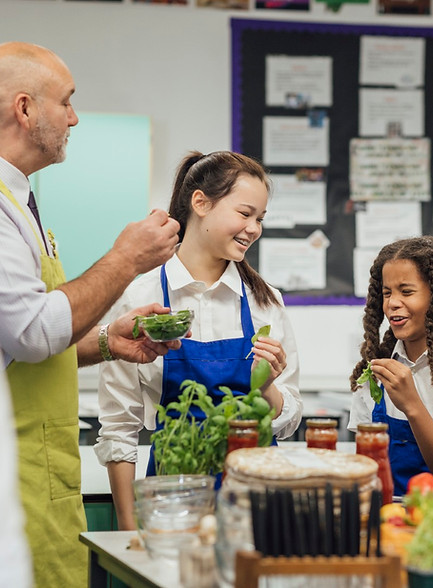
Food lessons were often described as spaces where pupils can experience success quickly, learn from mistakes safely, work with others and take pride in something tangible. For some pupils, food education was seen as an important point of connection with school.
Government commitments on free school meals, breakfast provision and updated school food standards show renewed attention to the role food plays in children’s health and wellbeing.
But without a stronger place for food education in the curriculum and a robust accountability system, these reforms risk missing their full potential. Food education should be strengthened, not narrowed, so that all pupils can access the knowledge, skills and confidence they need to thrive.
To address these challenges, Best Food Forward calls on the government to:
1. Establish food education as a foundation subject for all pupils up to the age of 16. Protect curriculum time, safeguard Key Stage 4 qualifications, and ensure every child can Learn it, See it and Live it.
2. Appoint dedicated school food leads in Multi Academy Trusts and local authorities to drive a whole-school approach to food, ensuring that food education and food provision reinforce one another in supporting learning, health and wellbeing.
3. Rebuild clear and credible post-16 progression pathways, including reintroducing a Food A level, so that young people can progress into further study and careers across the food sector.