

We have seen first-hand what is possible when schools prioritise food learning. Now we need national action to make it universal.

Food education matters. It supports young people’s health, wellbeing and independence, whilst contributing to wider social, environmental and economic goals. Yet provision in English secondary schools is fragmented and inconsistent.
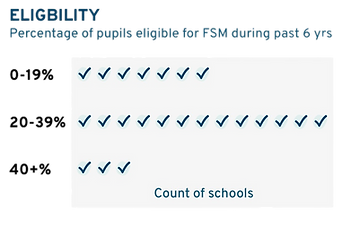
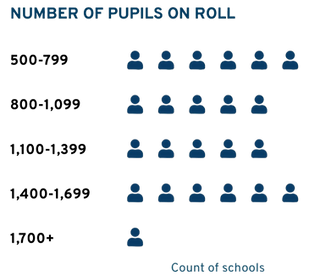
The Best Food Forward Food Education Mapping Project (FEMP) set out to provide an up-to-date picture of food learning across the school day and beyond, capturing the experiences of students, teachers and leaders in 23 case study schools.
The project explored how food education is delivered through the curriculum, shaped by the school environment and applied in real-world contexts. The project is framed within current educational and food-related policies, recognising the opportunities created by the National Food Strategy (The Good Food Cycle), the Curriculum and Assessment Review, and the planned extension of free school meals and updating of the School Food Standards.
FEMP CASE STUDY SCHOOLS
.png)
.png)
.png)
23 school visits
8 out of 9 English regions
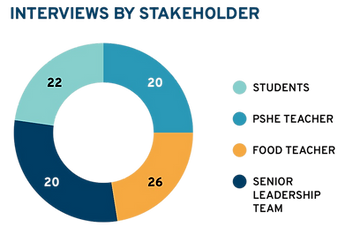
88 interviews in total


Why is learning about food so important throughout secondary school?
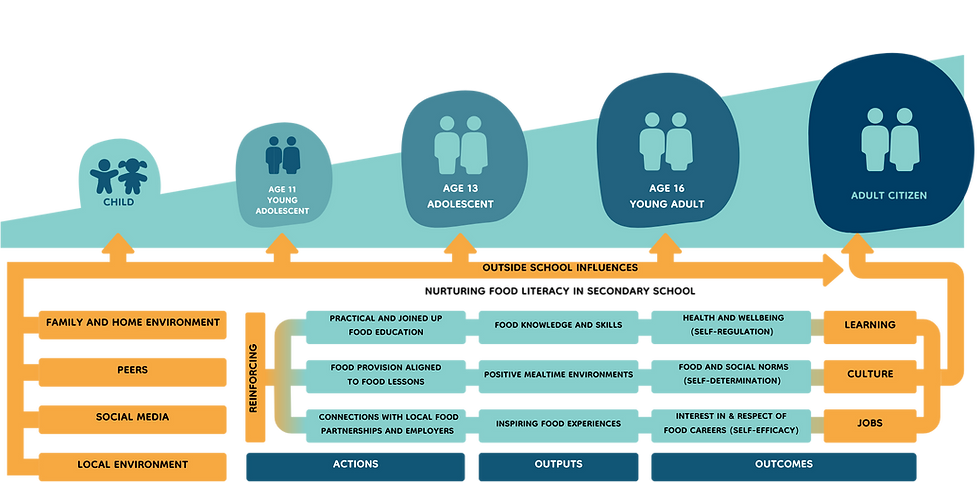
Supporting the next generation on their journey to healthy independent lives
The figure above illustrates why food education is essential. It supports young people’s health, wellbeing, and independence, while contributing to wider social, environmental, and economic goals. Yet provision in English secondary schools is fragmented and inconsistent.
Learn it
-
Food education is valued by students and staff for developing essential life skills.
-
The combination of theory and practice in food lessons fosters an engaging learning experience.
-
Limited curriculum time, staffing, and resources hinder students, particularly at KS3, from gaining nutrition knowledge and practical cooking skills.
See it
-
Food is rarely embedded in whole-school policy or planning, despite teachers and leaders recognising its importance.
-
School food environments have the potential to reinforce and extend food learning but are not consistently designed to do so.
-
In certain schools, food is central to the school’s ethos, fostering a strong food culture and sense of community.
-
In others, the school food offer contradicts curriculum teaching, undermining food learning, and missing opportunities to support student well-being.
Live it
-
There are widespread opportunities for action-based food learning, both invited into school and beyond the school gate in real-world settings.
-
Real-world experiences can inspire students, extend their understanding and give them a chance to apply their learning.
-
However, access to these opportunities is infrequent and unequal, and is rarely meaningfully aligned with the school food curriculum.

